
What is the difference between different grades of PE pipe fittings?
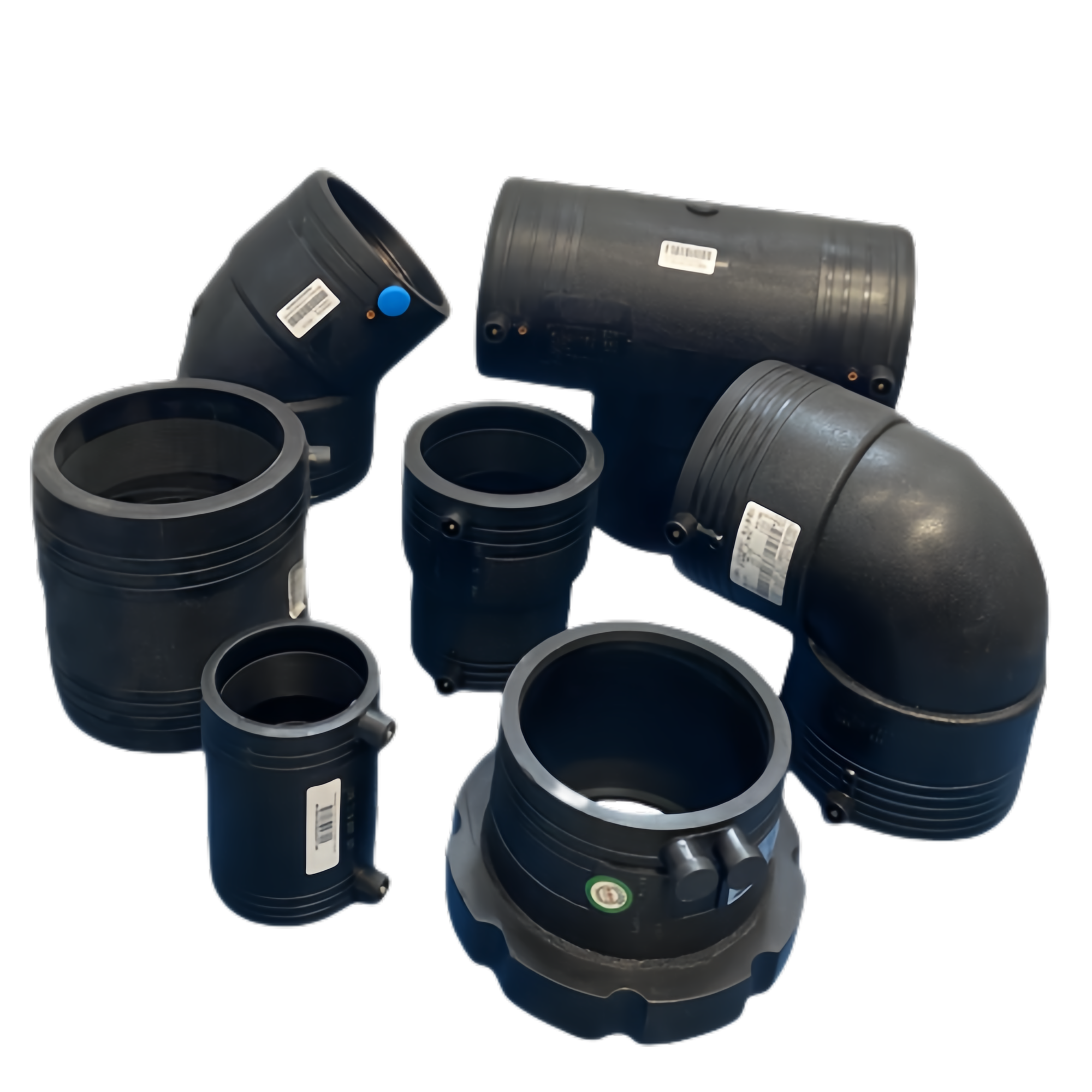
What is the difference between different grades of PE pipe fittings?
PE pipe fittings refer to the connecting fittings of polyethylene pipes, which are widely used in water supply, drainage, gas transmission and other fields. With the continuous development of polyethylene materials, the grade classification of PE pipe fittings has gradually formed, which not only reflects the performance and scope of application of the product, but also affects its selection and use effect in practical applications. This article will discuss in detail the classification of PE pipe fittings and the differences between them.
Classification of PE Fitting Grades
PE fittings are classified into grades based on factors such as material performance, pressure resistance, operating temperature, and application fields. Generally, PE fittings can be categorized into the following grades:
PE80 (PE-80)
This is the earliest polyethylene material used, with relatively low pressure resistance. It is typically applied in low-pressure water supply and drainage systems. PE80 has lower tensile strength and temperature resistance, making it suitable for environments where temperatures do not exceed 40°C.PE100 (PE-100)
Compared to PE80, PE100 exhibits significantly improved performance. Its higher pressure resistance allows it to withstand greater loads, making it widely used in medium- to high-pressure water supply and gas pipelines. PE100 also operates effectively across broader temperature ranges, offering greater adaptability.PE4710 (PE-4710)
Classified under U.S. standards, PE4710 features enhanced pressure resistance and environmental stress crack resistance (ESCR), making it ideal for high-demand engineering projects. It is commonly used in urban water supply systems and large-scale water transmission pipelines.PE-HD (High-Density Polyethylene)
HDPE fittings are known for their exceptional toughness and corrosion resistance. They are suitable for diverse applications, including chemical industries and agricultural irrigation. Their grades can be further subdivided based on specific requirements.
Differences Between Grades
Pressure Resistance
PE100 has far superior pressure resistance compared to PE80, making it suitable for high-pressure pipeline systems, while PE80 is limited to low-pressure environments. This distinction necessitates selecting fittings based on specific engineering demands.Temperature Resistance
PE100 and PE4710 can operate at higher temperatures, whereas PE80 has lower thermal stability. This difference is critical for hot water pipelines or high-temperature fluid transport applications.Service Life
PE100 and PE4710 generally offer longer service lives and better ESCR due to their advanced material properties. In contrast, PE80 may experience premature aging or cracking under high-stress conditions.Application Fields
PE80 is commonly used for general potable water and rainwater drainage systems, while PE100 and PE4710 are preferred for complex, high-demand scenarios such as urban water supply, industrial fluid transport, and gas distribution.Cost-Effectiveness
Although PE100 and PE4710 entail higher initial costs, their extended lifespan and lower maintenance requirements often make them more economical in the long term. PE80, with its lower upfront cost, remains prevalent in low-pressure applications.
The classification of PE fitting grades provides essential guidance for engineering design and pipeline selection. Understanding the differences between grades enables designers and engineers to choose the most suitable materials for ensuring system safety and cost-efficiency. When selecting PE fittings, factors such as pressure, temperature, project-specific needs, budget, and long-term maintenance costs should all be comprehensively evaluated. By appropriately leveraging different PE grades, the overall performance and durability of pipeline systems can be significantly enhanced.