
Why do we need to use PE pipe fittings?
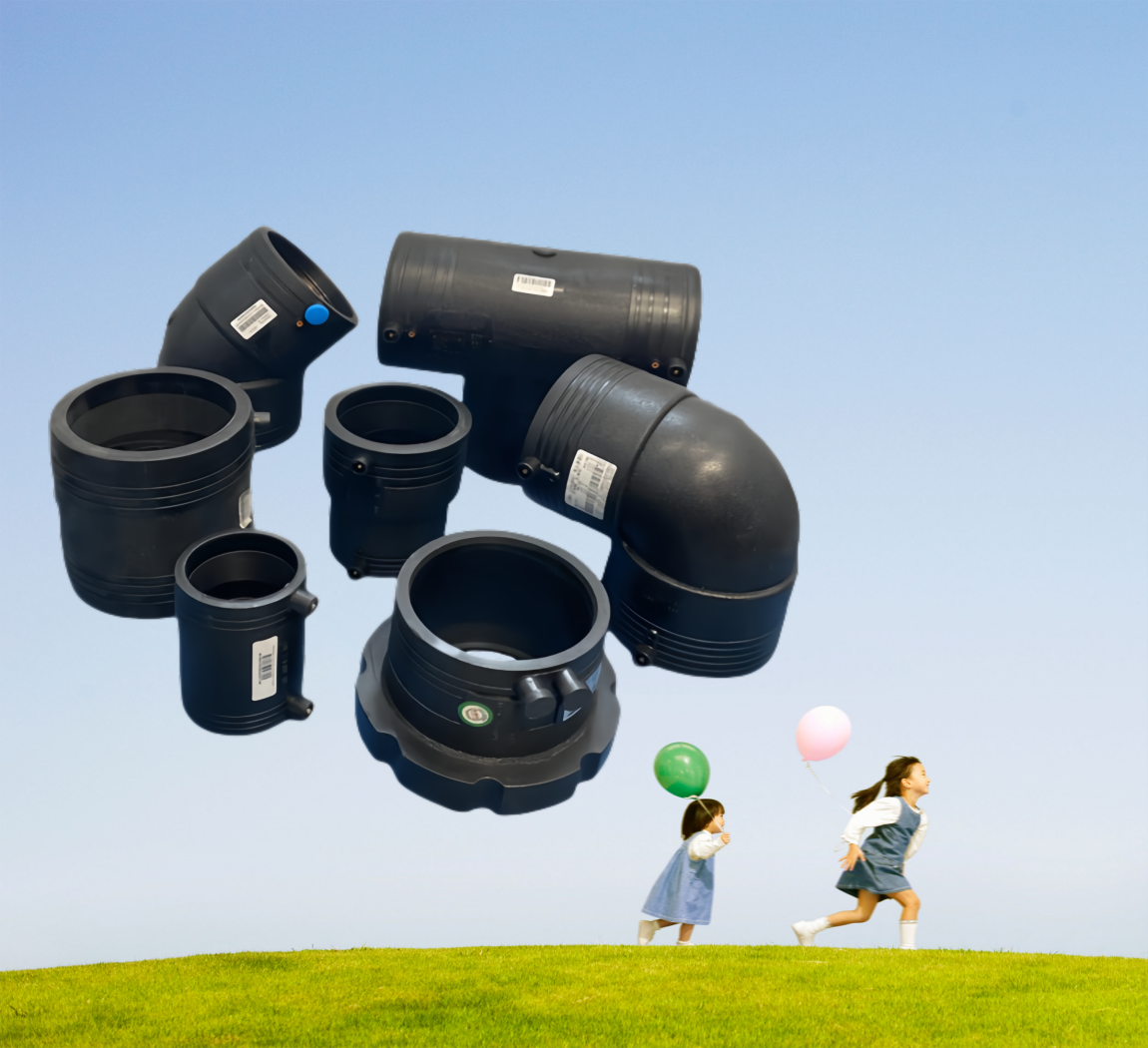
In the construction of modern urban infrastructure, PE pipe fittings are an important fitting, although many people know little about it, but in fact it plays an indispensable role in cooperating with PE pipe engineering. The diameter range of PE (polyethylene) pipe fittings is usually between DE2 and DE1000, and is mainly used in drinking water engineering and other fields. Let's discuss the importance of PE pipe fittings, model selection and use skills.
1. Definition and function of PE pipe fittings
PE pipe fittings refer to various fittings used to connect PE pipes, including tees, elbows, flanges, etc. Their main function is to connect, turn, branch and extend pipelines, ensuring the integrity of the pipeline system and the smooth flow of fluids. Due to the corrosion resistance and excellent flexibility of its material, PE pipe fittings can maintain good performance in a variety of environments, especially in drinking water transmission systems, which can effectively avoid water pollution.
2. Specifications and models of PE pipe fittings
PE fittings are typically 4 or 6 meters in length, which allows for flexible connections and adjustments during pipe laying. When the length of the pipe is insufficient, the desired length can be achieved by connecting multiple fittings. In addition, according to different application scenarios, the models of PE pipe fittings are also different. For example:
1. Tee: Used for branch pipelines, able to distribute the fluid of the main pipeline to other directions.
2. Elbow: used for the turning of the pipeline, there are two angles of 45 degrees and 90 degrees, which can effectively change the flow direction of the fluid.
3. Flange: used for the connection of pipes, easy to disassemble and maintain.
Choosing the right PE pipe fitting model can not only improve the construction efficiency, but also ensure the stability and durability of the pipeline system.
Electrofusion pipe fittings
3. How to choose PE pipe fittings
When choosing PE pipe fittings, the following factors need to be considered:
1. Pipe diameter: Select the corresponding size of pipe fittings according to the diameter of the PE pipe used to ensure the tightness of the connection and the flow efficiency of the fluid.
2. Application environment: Different application scenarios have different performance requirements for pipe fittings, such as in high-pressure environments, it is necessary to choose stronger pipe fittings.
3. Installation method: Understand the installation method of the required pipe fittings, choose products that are easy to install and maintain, so as to reduce construction time and cost.
4. Quality standards: Choose PE pipe fittings that meet national or industry standards to ensure the safety and reliability of products.
Fourth, the advantages of PE pipe fittings
The advantages of using PE fittings are obvious:
- Corrosion resistance: PE material has excellent corrosion resistance, can adapt to a variety of chemical media, and prolong the service life.
- Lightweight: PE fittings are lighter than traditional metal fittings, making them easy to transport and install.
- Cost-effective: While the initial investment may be high, its durability and low maintenance costs make it more economical for long-term use.
- Environmental friendliness: PE material is recyclable, environmentally friendly, and meets the requirements of modern sustainable development.
Although many people have limited understanding of PE pipe fittings, it plays an important role in engineering. Through the reasonable selection and use of PE pipe fittings, the efficiency and safety of the pipeline system can be greatly improved. In the future infrastructure construction, PE pipe fittings will continue to play its unique advantages to meet people's needs for drinking water safety and pipeline stability. It is hoped that through the introduction of this article, more people can realize the importance of PE pipe fittings and make a wise choice in practical application.