
Enhanced thermop lastic composite p ipe joints Research the status quo and development trend
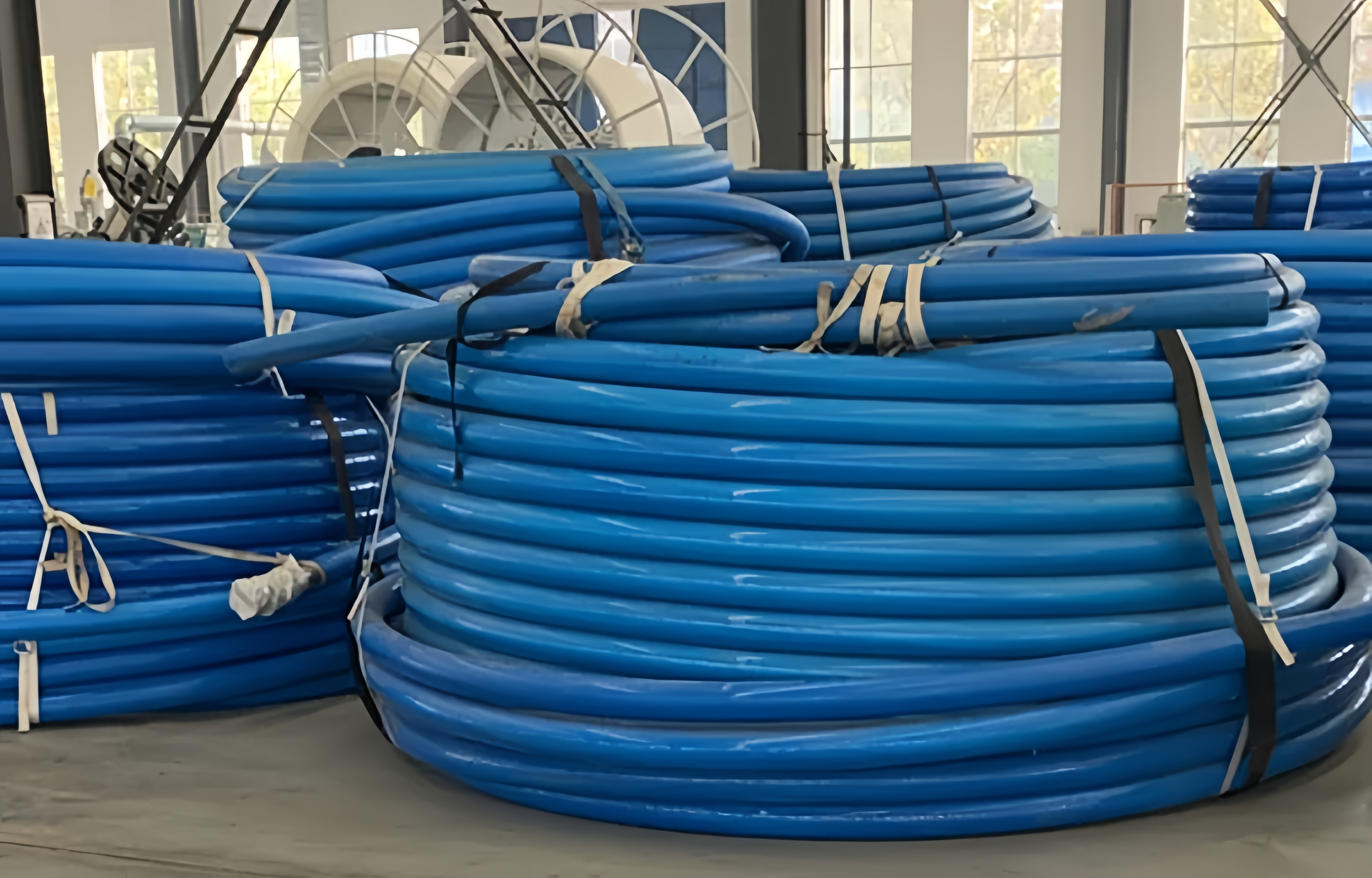
Enhanced thermop lastic composite p ipe joints
Research the status quo and development trend
Fan Chong 1,2, Zhang Xiaoyong 1, Wei Bin 2, Chang Jianxiu 1
( 1. School of Materials Science and Engineering, Xi an Petroleum University, Xi an 710065; 2. CNPC Engineering Materials Research Institute Co., LTD.,
State Key Laboratory of Service Behavior and Structural Safety of Petroleum Pipe and Equipment Materials, Xian 710077)
Abstract : Enhanced thermop lastic composite p ipe (RTP) is a new development of a p lastic p ipe in recent years, its good flexibility, corrosion resistance and convenience, so that it in the oil, natural gas exp loitation and other fields have been a lot of app lications. Pressure resistance and high sealing of the composite p ipe joint are the key factors for its safe operation. The status and performance of the development of enhanced thermop lastic composite p ipe (RTP) are introduced and analyzed, and the joint form structure and development status and future research direction of RTP are summarized. At the same time, the current situation and research progress of the joint are analyzed from the joint structure design and optimization, corrosion resistance and sealing performance. It provides a reference for improving the structure and performance of the enhanced thermop lastic composite p ipe (RTP)
joint and promoting the rap id development of RTP connection technology. Key words : RTP ; enhanced thermop lasticity ; composite joint
Middle map classification number : TE 375 Reference code : ADOI : 10.19291/j. cnki.1001-3938.2023.05.002 Present State and Future Development of Reinforced Thermoplastic Pipe J oints
FAN Chong 1, 2 , ZHANG Xiaoyon g 1 , WEI Bin 2 , CHANG Jianxiu 1
(1. School of Materials Science and Engineering, Xian Shiyou University, Xian 710065,China;
2. CNPC Tubular Goods Research In stitute, State Key Laboratory for Performance and Structure Safety of Petroleum Tubular Goods and Equipment Mate rials, Xian 710077, China)
Abstract: Reinforced thermoplastic pipe (RTP) is a newly developed plastic pipe in recent years. Due to its excellent flexibility, corrosion resistance, and convenience, it is widely used in oil and nat ural gas fields. The pressure resistance and high sealing performance of RTP joints are key factors for t heir safe operation. The current development status and performance of RTP are introduced and analyzed. The joint, developmen t status, and future research directions of RTP are summarized. Meanwhile,in⁃depth analysis was conducted on the current status and research progress of the joints from three aspects: joint structure design and optimization , joint corrosion resistance , and joint sealing performance . References are provided for improving the structure and performance of RTP joints in the future and promoting the rapid development of RTP connection technology.
Key words: RTP; reinforced thermoplastic properties; composite pipe joint
0 Preface With the application of secondary
and tertiary oil recovery technology of
oil, natural gas and other energy sources, the working conditions of downhole pipe posts, ground gathering and transportation system and oil and gas treatment equipment are increasingly harsh, and the corrosion problem of metal pipelines is increasingly prominent, and corrosion and perforation frequently occur

Elephant, seriously endangering production safety, causing irreversible environmental pollution and serious social problems. Therefore, the research and application of non-metallic pipelines, especially the research of enhanced thermoplastic composite flexible pipeline RTP (reinforced thermo plastic pipe), has attracted the attention of the world [ 1].
Enhanced thermoplastic composite tube RTP is a composite flexibility
Phase 5: Fan Chong et al.: Research status and development trend of reinforced thermoplastic composite pipe joints
Pipeline, [2]. Compared with traditional metal pipes and plastic pipes, RTP can still maintain the flexibility and corrosion resistance of polyethylene pipes while bearing high working pressure. It can be made into a coil, namely continuous pipe form, which is convenient for transportation, rapid laying and cost reduction [3]. In recent years, RTP has been widely used in oil and gas transportation, mining and aerospace fields.
The RTP pipe wall generally has a three-layer structure, including the inner lining layer, the structural layer and the outer protective layer. The lining layer is generally made of polyethylene, polypropylene and other polymer materials with corrosion resistance and wear resistance, according to the conveying medium and conditions, combined with the mechanical properties, physical properties and thermal properties of the lining material. The middle is the structural layer, which is the pressure guarantee of the composite pipe, and requires fluid compatibility, temperature resistance and anti-aging performance. There are many types of materials, which can be formed by steel strip, glass fiber or aramid fiber, also known as reinforced layer. The main function of the outer protective layer is to maintain the external integrity of pipeline installation and working conditions. Generally, it is [4] of aging resistance and friction resistance. According to the pipeline operating conditions and environmental conditions, the mechanical properties, physical properties and permeability of the materials are considered, and the weather resistance should also be considered due to the contact with the external environment.
The RTP joint acts as RTP connection and sealing. If RTP is used as the joint material, the reinforced fiber connection cannot be formed
Effective force transfer structure, so RTP usually uses metal materials to connect the [5-8]. At present, there are many forms of composite pipe joint. With the development of RTP pipe design and manufacturing technology, its application environment is becoming more and more demanding, which brings greater challenges to the continuous good work of RTP pipeline and its joints.
1 The RTP connection technique
RTP usually has two categories: mechanical compression and non-mechanical compression. Mechanical bonding can be divided into mechanical bonding and wedge compaction, mechanical bonding usually consists of two parts: the inner core pipe with annular sawtooth structure on the outer surface, and the inner coat with annular sawtooth structure on the inner surface, and the coat are connected by thread, as shown in Figure 1. The working principle of the mechanical compression joint is to insert the RTP between the joint coat and the inner core pipe, and then apply external pressure to the coat. Relying on the annular serrated structure of the joint and RTP to realize the sealing and axial load transmission, and the connection between the pipe and pipe is completed by the metal joint. After the joint is connected, the inner diameter of the joint is the same as the inner diameter of the pipe. The internal and external pressure applied by the service environment ensures the effective connection between the joint and the composite pipe. The joint and pipe body are completely sealed at 360° . If special needs, the vent can be made for ventilation, which is very suitable for high pressure transmission [9] of natural gas.
(A) Stup joint jacket (b) Stup joint core tube
Figure 1 Structure of buckle joint
Mechanical compression connection , the method is relatively simple, convenient construction, widely used in the buried pipeline connection
engineering [ 10] . The Austrian company Pipe life connected the RTP pipe by mechanical compression, as shown in Figure 2. The special RTP
HAN GUAN
· 9 ·
Phase 5: Fan Chong et al.: Research status and development trend of reinforced thermoplastic composite pipe joints
pipe is mechanically used to promote the inner and outer sleeve section of the metal joint, closely matching the pipe and the joint through plastic deformation, and achieving the sealing performance requirements of [ 11] . The PE-steel reinforced layer-PE structure Flexsteel pipe produced by Flexstee l Company in the United States also adopts the mechanical buckle type connection mode, and Chengdu Qinx in Machinery Co ., Ltd. in China also adopts this connection mode for RTP pipe, both
Good effect [ 12] were obtained, as shown in Figure 3.
air-bleed hole
Connect the inner tube casing sleeve 0 seal ring
Fig. 2 Schematic diagram of metal buckle p ipe structure
HAN GUAN
· 9 ·
Weld pipe, 2023, Volume 46
Fig. 3 Physical metal buckle connection p ipe fittings
The metal button joint is simple and convenient for construction, so it is favored by the market, but the connection may have two major defects: ① In order to press the end of the metal sleeve-RTP pipe end-pipe fitting, a certain pressure must be applied to the RTP pipe end, resulting in the compression deformation of the RTP pipe end and the thinning of the inner wall of the joint. In addition, the deformation of the RTP pipe end causes the deformation of the joint and the main body of the pipe, and the stress concentration at the connection between the joint and the pipe body, and eventually lead to rupture and failure, which is also the reason for the failure of the RTP joint and the pipe body in the hydraulic blasting test [13-14]; ② metal buckle pipe piece is generally made of stainless steel or carbon steel through mold forging, the cost is relatively high, and it is difficult to avoid corrosion problems.
(a) connect
Weld pipe, 2023, Volume 46
One structure with the most applied wedge compression joints is shown in Figure 4, consisting of ANSI standard flange plugs, wedge metal blocks, and a metal coat. The plug is inserted into the inner wall of the RTP tube as the structural basis of the joint system; the inner wall is the most important structure of the connector system between the jacket and the connector system and the outside of the wedge to press the wedge and enhance the contact between the wedge and the outer wall [ 15]. The most prominent advantage of this kind of joint is that because no external force is applied in the loading process, the joint will not be easily deformed, so it can be reused, greatly reducing the pipeline transportation cost, extending the service life of the joint, and is widely used to connect the ocean RTP. Foreign commonly used Marine RTP joints mainly include Traplock-joint, Magma joints and other [ 16]. Traplock Joint is one of the earliest connection methods used in Marine RTP. It is connected with RTP in the form of fiber reinforced material wrapped on the tooth outline of the outer surface of the
joint. This joint has poor tensile resistance and sealing performance, and is mostly used for pipeline transportation [ 17] in low-pressure waters. The Magma type joint is developed by Magma company, which has higher tensile resistance and better sealing performance compared with the other joints of the same type, And the construction is convenient, can be used in a large number of deep-sea flexible pipe connection [ 18] .
(b) plug
(C) voussoir (d) overcoat
Figure 4 Wedge clamp ing joint system and its metal components
The main application mode of non - mechanical compression joint is to enhance the electric melt socket joint, which relies on high temperature dissolution of RTP to achieve the purpose of connection and sealing. The fusion connection mode is shown in Figure 5 [21], first pick
The inner polyethylene is connected by the butt weld process, and then the enhanced thermoplastic sleeve mounted on the RTP body prior to the butt weld is moved to the joint site, and the outer polyethylene is melted by a copper heating coil inside the sleeve
Phase 5: Fan Chong et al.: Research status and development trend of reinforced thermoplastic composite pipe joints
Enes , connecting sleeve and outer polyethylene together to absorb and transfer axial forces . Electric melt pipe fittings can be divided into three kinds according to their materials: full plastic electric melt pipe fittings , steel skeleton reinforced composite electric melt pipe fittings and glass fiber reinforced composite electric melt pipe fittings . At present, the whole plastic electric pipe is the most widely used, but the pressure grade is low; the steel skeleton reinforced composite electric pipe has improved pressure resistance, but due to the creep nature of plastic, at high temperature or pressure, the steel belt reinforced layer in the hole in the pipe wall is easy to shear the " plastic strip "
Failure of the pipe fittings; glass fiber reinforced composite electric melt pipe fittings can effectively overcome the layered defects of steel skeleton reinforcement by glass fiber immersion treatment technology, with the highest pressure resistance grade . The connection method of the reinforced composite polyethylene pipe of MESCO company is to strip an reinforced layer, and then the polyethylene lining pipe wall thick butt melt welding or melt welding with electric melt sleeve, followed by the reinforcing belt on the molten welding surface, and finally the thermal shrinkage cross linked polyethylene sleeve as the outer protective layer for protection [ 19] .
(C ) Welding stage (d) holding stage
Figure 5 : RTP fusion connection mode
2 Key performance status and progress of the RTP connector
The joint serves as the terminal connection device of pipe system,
which is mainly used to connect pipes with other structures , to seal the internal conveying medium of pipes, and to prevent pipe removal. Composite pipe is different from the
HAN GUAN
· 1 1 ·
Phase 5: Fan Chong et al.: Research status and development trend of reinforced thermoplastic composite pipe joints
metal pipe , its structure is more special and complex, can not use the traditional welding form of pipe end connection . Because the joint and composite pipe contact surface belongs to the metal and non-metal surface , and metal and non-metal material thermal expansion coefficient, thermal conductivity, stiffness and Poisson ratio has a great difference, when the composite pipe and joint system by external load, metal and non-metal response mode is different, may lead to the composite pipe and joint stripping , makes the joint and pipe connection failure [ 20] . Therefore , for the pipeline system, the reasonable design of the joint structure and seal and the anti corrosion design of the pipeline have an important influence on the safety and stability of oil exploitation and transportation .
2. 1 Joint structure optimization and design
During the loading of the button joint, the annular serration with the inner core and the metal coat fit the RTP, so the bite size between the annular serration and the RTP is the key factor in determining the effectiveness of the joint installation. The inner core of the joint will be affected by the axial force applied by the fluid during the service. If the occlusion size of annular serrated and RTP is too small, the joint cannot meet the strength requirements and the joint is easy to fall off and fail; if the occlusion size is too large, the serrated structure will damage RTP and lead to oil and gas leakage [21]. According to the optimal design of the annular serrated structure of the buckle joint, the finite element model can be established to simulate the stress performance of the RTP under the fixed load, by changing the structural parameters of the annular serrated, and to determine the best parameters of the RTP failure judgment standard. Zhang Xuemin et al. [22] established a finite element model of the RTP connector system, as shown in Figure 6. The external force in the real service environment is used as the simulation parameter to study the radial pressure and the axial tension of the joint
HAN GUAN
· 1 1 ·
Weld pipe, 2023, Volume 46
For the judgment criteria, the structural parameters such as Angle, length, height and number of the ring serration are gradually optimized, and finally the best structural parameters of the ring serration are determined through a large number of simulation result data.
F igure 6 F inite element model of the RTP connector system
In addition, enterprises and research scholars have also optimized the joint connection mode and ancillary structure. Shandong east macro pipe industry co., LTD. On the basis of the original wire mesh skeleton polyethylene composite pipe connection technology the design improved the connection way, using special steel reinforcement, each steel wire in the special steel reinforcement end corner produce a nearly 90 ° turn, the composite pipe at both ends of the wire to resist axial force, so that the connection between steel wire and steel reinforcement strong enhanced [23]. Gong Shunfeng et al. [24] studied the buckling response of steel pipes under external pressure, bending and axial tensile load, and discussed the load loading path and the key parameters. The scientific research team of Professor Bai Yong, School of Architectural Engineering, Zhejiang University, [25-26] also made in-depth analysis and research on the mechanical properties of fiber reinforced composite tube, offshore installation analysis, installation method and installation stability of RTP tube.
Due to the restriction of Marine RTP service environment, the structure optimization of wedge compression joint is more complicated. Zhang Dapeng et al. [27] used SolidWorks to design different structural joints for bonded flexible tubes and non-bonded enhanced thermoplastic tubes, used ABAQUS to establish a finite element simulation analysis model under different working conditions and different environmental load conditions, and compared the compressive strength and tensile strength of the two kinds of composite tubes. The results show that for the non-sticky flexible pipe joint, the end to the root of the resistant armor layer, increases the ring metal protective sleeve and the joint body installation connection, in the gap between the end of the resistant armor layer and epoxy resin, can enhance the ability to bear internal pressure here. Wang Shaopeng et al. [28] designed a new wedge clamping joint for 152.4 mm (6 in) nonmetal bonded RTP tubes suitable for underwater, as shown in Figure 7. The key part of the joint is a wedge with clamping teeth on the inner wall, which is embedded between the joint sleeve and the composite pipe when the joint system is active, thus improving the joint
Weld pipe, 2023, Volume 46
Overall strength, while the clamping structure can ensure that the joint and the composite pipe under pressure, enhance the sealing performance of the joint. Yang Baocheng et al. [29] used ABAQUS finite element analysis software to simulate the buckle pressure process of the pipe joint, and developed a new type of non-bonded flexible pipe joint, which not only avoided the deformation of the vent, but also improved the structural strength of the vent hole. In addition, Ma Gang and other [30] considered the geometric asymmetry of the joint, adopted the 3 D overall modeling, simulated the pretension behavior of the bolt through the pretension unit of ANSYS software, used the contact unit to simulate the interaction between the components, and proposed a method to determine the pretension force of the bolt. Cao Baogang et al. [31] conducted a finite element simulation for the non-linear flange joints, and systematically analyzed the influence of the structural size, material characteristics, bolt tightening degree and the internal pressure load of the flange joints on the performance of the flange joints.
nonlinear, contact, established the enhanced thermal plastic tube melt joint electrostatic analysis model, and according to the analysis results through the tube composite laminated structure optimization, realize the optimization of the structure. He J inning [34] uses ANSYS to carry out static contact analysis, creep and stress relaxation analysis and optimization design of RTP flange melt joint, with the tooth height, pitch, cutting Angle and tooth number that affect the thread shape as the design variables, and adopts the zero-order method to realize the structural optimization of flange melt joint.
A large number of studies show that the reliability of the joint can be improved more effectively by optimizing the parameters or adding the new design key components to the original component structure of the joint.
2.2 Joint anticorrosion performance
Composite pipe and joint connection system in the delivery medium, inside
Joint body sealing ring wedge block flange flexible tube
F igure 7 RTP new wedge clamp joint system
In the study of enhanced melt RTP joint, Liu et al. [32] invented a new type of enhanced melt connection joint. They analyzed the stress distribution of the joint and RTP under the limit of finite element simulation, and verified the rationality and reliability of the new joint with the simulation results. Shi Zhihua [33] in ANSYS system established 40G150P / A 2 type enhanced thermal plastic tube melt joint finite element analysis model, considering the material
Phase 5: Fan Chong et al.: Research status and development trend of reinforced thermoplastic composite pipe joints
Will be corroded by the oil and gas media, the external will be corroded by the service environment [35]. Therefore, the joint in the factory before the internal and external surface anti corrosion treatment. Joint anti corrosion technology includes the selection of stainless steel, corrosion resistant alloy materials and epoxy powder external coating technology.
At present, on the selection of reinforced thermoplastic composite pipe joints , the commonly used stainless steel materials are 316L stainless steel. On the basis of stainless steel and other corrosion resistant alloy materials , a variety of joint materials are derived. Lu Guo qing et al. [ 36] invented a stainless steel composite pipe joint with cast iron or galvanized pipe as the pipe joint body, which is characterized by a plastic layer on the body of the stainless steel composite pipe joint, and a layer of stainless steel lining is laid on the plastic layer, which further enhances the corrosion resistance of stainless steel material.
Epoxy powder coating has strong adhesion on the metal surface, and the powder paint film has the characteristics of high hardness, friction resistance and corrosion resistance. Epoxy powder has strong adaptability, can use electrostatic spraying, flame spraying and other methods on the metal surface, of which electrostatic coating method. Due to joint plastic deformation in the process of corrosion coating is damaged, so need to in the epoxy powder coating work, in a dry environment using spraying device on the
joint wall coating surface spray an inert material, make the joint wall to add a layer of uniform protective layer with the function of sacrifice anode, so as to effectively prevent the corrosion coating destroyed [37].
2.3 Joint sealing performance
Compared with the traditional metal pipes by welding connection , RTP relies on external metal joints to realize the connection between pipes . Due to the difference between the material itself, the two will not be tight , resulting in insufficient sealing performance . The joint and composite pipe connection are the most prone to oil and gas leakage in the whole pipe section
HAN GUAN
· 13 ·
Phase 5: Fan Chong et al.: Research status and development trend of reinforced thermoplastic composite pipe joints
During loading , " O " rubber sealing ring
can be embedded in the axial contact
parts of the composite pipe and the joint ,
and the axial load generated when
conveying the medium will squeeze the sealing ring to improve the joint sealing pe rformance; or use mo re metal joints
with sealing properties , such as gas seal threaded joint [ 38] and serrated joint .
The sealing structures of most unbonded flexible pipe joints are sealing by squeezing the mold sealing ring with serrations to generate contact pressure, as shown in Figure 8 [39]. Most of the current analysis focuses on the solution of the contact pressure, or evaluates the sealing performance of the product through the test. Bank e and Jensen[40] studied the sealing performance of NKT's unbonded pipe joints under high pressure and temperature cycle loads, and designed a test device. Fernando, Nott, Graham and other [41] measured the contact pressure on the metal and metal contact surface of the non-bonded pipe joint by Wellstream non-contact ultrasonic method
and compared with the finite element analysis results. This way of evaluating the sealing performance by UTM method is relatively novel. Fernando and George[42] establish the numerical model of the joint structure, obtain the contact pressure distribution on the two leakage channels, and then evaluate the sealing effect of the joint, and verify it with the test. Li Xiangyun et al. [43] made a structural analysis of the flexible pipe joint in a sea area, and studied the change law of the sealing performance under different loading displacement, sealing ring cone Angle and radius of curvature of the sealing circle arc. The study found that the main design parameters of the sealing structure were the cone Angle and curvature of the sealing ringRadius as well as the loading displacement. Zhang Liang et al. [39,44] simulated the sealing performance of the sealing ring of non - bonded pipe joints used in a sea area, proposed an easy-to-use sealing criterion, and designed the sealing ring for non - bonded pipe joints. Zhao Miao
three non-bonded p ipe joints
HAN GUAN
· 13 ·
Weld pipe, 2023, Volume 46
Miao et al. [45] optimized and improved the traditional button joint structure, as shown in Figure 9. The improved inner and outer sleeve of the joint is set to the radian slope chamfer thread, so that the joint can evenly spread the axial load, so as to improve the strength of the joint, and the arc surface can play a better sealing role. In addition, they invented a fluorinated e lastomer ring, which contains the metal reinforced structure inside the ring for higher strength and better corrosion and sealing properties than traditional rubber rings. This optimization improvement improves the sealing performance of the metal joint and effectively extends the service life of the joint. Mao Qingkai [46] deeply analyzed the key problems such as connection and sealing in the joint design process, and completed the example design of the shallow sea oil pipeline joint. Wu et al. [47] designed a buckle Marine hose joint and analyzed the influencing factors of the strength of the joint.
Left outer sleeve Ring seal right outer sleeve
|
Left metal joint co re
Right metal fitting core of metal outer
sheath
Fig. 9 Section of nonmetal flexible composite p ipe connector
new parts will be a better way to improve the sealing performance of the joint .
3 Conclusion
This paper introduces and analyzes the development status and performance of enhanced thermoplastic composite pipe ( RTP), and focuses on the joint form structure and development status and future research direction of RTP. The current situation and research progress are analyzed from the joint structure design and optimization, joint corrosion resistance and joint sealing performance . It provides a reference for improving the structure and performance of the enhanced thermoplastic composite pipe ( RTP) joint and promoting the rapid development of RTP connection technology.
Ring sealing ring extrusio n sealing method and the joint and RTP co nnection problems , the ring sealing ring made of polymerization material , and metal joint close contact is easy to wear , fracture and failure [4 8] , so in the subsequent research on the sealing perfor mance of RTP joint , improve the joint structure or add
Weld pipe, 2023, Volume 46
reference documentation :
[ 1] Zhang Guanjun, Qi Guoquan, Qi Dongtao.
Application status and prospects of non-metallic and composites in the field of petroleum pipe [J]. Petroleum Science and Technology Forum, 201
7,36 (2): 26-31,37.
[2] Wang Dengyong, Wu Nian. Comparison of enhanced thermoplastic composite tubes at home and abroad [J].
Foreign plastics, 2011,29 (5): 44-49,56-57.
[3] Han Fangyong, Liu Liu, Liu Qing. Suggestions on the application and key performance control of
enhanced thermoplastic composite tubes in oil
and gas fields [J]. Petroleum Planning and Design, 2020,31 (6): 19-21.
[4] Wang Dapeng, Sun Yan, Zhang Youqiang, et al. Status and progress of enhanced thermoplastic composite tubes [J]. Plastics, 2017,46 (4): 69-72.
[5] Feng Dehua, Qiyaoguang, Yu Yanqun. Tensile
properties of Marine fiber reinforced composite flexible tube [J]. Journal of China University of
Petroleum ( Natural Science Edition), 2021,4 5 (4): 146-152.
[6] Li Hui ming, Dong Jianwei, Li Pengcheng. Research on the application of Flexible risers in Marine
Engineering [J]. Modern Manufacturing
Technology and Equipment, 2020, 56 ( 11): 142-143.
[7] Wang Li, Ma Weiguo, Zhang Fang. Research status and development of composite continuous pipe and its Mechanical properties [J]. Petroleum
Machinery, 2021,49 (6): 123-131.
[8] Huang Xianbin, Zeng Yi, Zhang Weiya, et al. Continuous fiber reinforced composite pipe joint design [J / OL]. Oil and gas storage and transportation: 1-9. http: / / kns. cnki.net/kcms/detail/1093. TE . 20230227.0851.004. html .
[9] Wang Tao. Analysis on the application of flexible composite pipe in oilfield gathering and
transportation [J]. China Petroleum and Petrochemical, 2017 (1): 80-81.
[ 10] Liu Wenshu . Joint design and numerical
simulation of reinforced thermoplastic
composite tubes [ D ] . Qingdao: Shandong
University of Science and Technology, 2019.
[ 11] Li Ping. Calculation of section strength and
optimization design of special joints for
bonded thermoplastic composite pipe for oil and gas transportation [ D]. Beijing: Beijing
University of Chemical Technology, 2020.
[12] Huang Baoyuan, Tao Weijie, Feng Jibin, et al.
Research progress and application status of
reinforced thermoplastic composite pipelines [J]. New Building Materials, 2017,44 (1): 71-76.
[ 13] Wang Yu. Research on the mechanism of axial compression instability of enhanced
thermoplastic tubes [ D]. Hangzhou: Zhejiang University, 2014.
[ 14] Kong Linghui, Wang Lika i. Research and
application of the high-pressure connection technology of steel wire mesh skeleton
polyethylene composite pipe [J]. China Plastics, 2017, 31 (4): 70-74.
[15] Wang Teng, Qu Jinzhi, Bao Xingxian, etc. Design and sealing analysis of deep water flexible
composite pipe joint [J]. Petroleum Machinery, 2021,49 (5): 74-80.
[16] Wen Shipeng. Overview of nonmetal bonded
Marine flexible riser joint structure [J].
Petroleum Mine Machinery, 2018,47 (3): 68-71.
[ 17] BALDWIN DONALD D( US) , REIGLE JOHN A ( US) , DREY MARK D US) . Interface s ystem between composite tubing and end fittings :
DE69832350[ P].2006-7-27.
[ 18] ROBERTS D , HATTON S A. d evelopment and qualification of end fittings for composite riser pipe[ M] . Child Adolesc Psychiatr Clin N Am , 2013.
[ 19] Hou Dongsheng. Research on the focused sound field of thick wall polyethylene pipe in Nuclear Power Plant [ D]. Hangzhou:
Zhejiang University, 2017.
[20] Tang Gao, Xiong Haichao, Bai Yong.
Mechanical analysis of steel wire winding
reinforced composite pipe under bending and external pressure [J]. Low temperature
building technology, 2016,38 ( 1): 34-36.
[21] Zhang Junxia, Teng Wei, Luan Guoyu. Innovation and research of high pressure hose assembly buckle technology
Phase 5: Fan Chong et al.: Research status and development trend of reinforced thermoplastic composite pipe joints
[J]. Value Engineering, 2010,29 (25): 14-15.
[22] Zhang Xuemin, Huang Huhan, Li Houbao, et al. Research on sealing properties and structural
optimization of composite thermoplastic buckle joints [J]. China Plastics, 2022,36 (10): 90-97.
[23] YUAN L, GONG S F, JIN W L, et al. Analysis on
buckling performance of submarine pipelines
during deepwater pipe-laying operation [J]. China Ocean Engineering (English version), 2009,23 (2): 14.
[ 24] GONG S F , YUAN L , J IN Wl , et al. Buckli ng response of offshore pipelines under
combined tension , bending , and external
pressure[ J] . Journal of Zhejiang University- Science A ( Applied Physics & Engineering), 2011 , 12( 8) :627-6 36.
[25] Bai Yong, Yu Bin bin, Cheng Peng. Theoretical
analysis and numerical simulation of installing old pipes [J]. Journal of Petroleum, 2012,33 (4): 716-722.
[26] Bai Yong, Huang Ting, Yang Honggang, et al.
Research on pure bending of steel wire winding reinforced plastic composite pipe [J]. Low-
temperature Building Technology, 2014,36 (4): 70-72.
[27] Zhang Dapeng, Wang Shaopeng, Bai Yong, et al. Analysis and research on two kinds of flexible pipeline joints based on ABAQUS [J]. Petroleum Engineering Construction, 2019,45 (1): 6-12.
[28] Wang Shaopeng, Zhu Keqiang, Zhang Dapeng, etc. Design and analysis of new underwater RTP tube wedge clamp joint [J]. Ship Engineering,
2016,38 (10): 35-40.
[29] Yang Baocheng, Chi Ming, Wang Shaopeng, et al. Design and analysis of new non-bonded
flexible pipe joints [J]. Ocean Engineering, 2016,34 (6): 118-122.
[30] Ma Gang, Sun Liping, Bai Yong, et al. Finite
element analysis of deep-water riser flange
joints [J]. Marine Engineering, 2008,186 (5): 90- 94.
[ 32] LIU W , GAO Y , SHAO Q , et al. Design and analysis of joints in reinforced thermoplastic
composite pipe under internal pressure[ J]
.Ships and Offshore Structures , 2021( 3): 1- 10.
[33] Shi Zhihua, Zhu Qiang. Finite element
static analysis and structural optimization of enhanced thermal plastic pipe electric melt joint [J]. Journal of Wuhu Vocational and Technical College, 2 010, 12 (3): 57-61.
[34] He J inning. Finite element analysis and optimization design of flange electric fusion joint [ D]. Nanjing: Southeast
University, 2006.
[ 35] KUMAR U , KUMAR P , NOORM T , et al. FEM based dela - mination damage analysis of bonded FRP composite pipe joints[ J] .2018, 7( 1):45-51.
[36] Lu Guoqing. Stainless steel composite pipe joint: CN2505681 [P].2002-8-14.
[37] Liu Xianbin, Liu Na, Guan Chuang, etc. A spraying device for buckle hose joint:
[31] Cao Baogang, Duan Chenghong, Guo Jufa, etc. Three-dimensional finite element analysis of
flange joints [J]. Journal of Beijing University of Chemical Technology (Natural Science edition), 1999 (2): 53-57.
HAN GUAN
· 15 ·
Phase 5: Fan Chong et al.: Research status and development trend of reinforced thermoplastic composite pipe joints
CN218048586U[ P].2022-12-16.
[ 38] KEITA I , MASAAKI S , KUNIO G. Influence of
grease onhigh- pressure gas tightness bymetal-to- met al seals ofpre - mium threaded connections[ J ] . Tribology Online, 2016 , 11( 2) :227-234.
[39] Zhang Liang. Analysis and Design of Seal System for Marine Non-bonded Flexible Pipe Joint [D]. Dalian: Dalian University of Technology, 2016.
[ 40] BANKE L , JENSEN T G. Test of seal system for fl exible pipe end fitting[ C]// 18th International Conference on Offshore Mechanics and Arctic
Engineering . Saint John , Canada: OMAE, 1999.
[ 41] FERNANDO U S , NOTT P , Graham G , et al.
Expe rimental evaluation of themetal-to-metal seal design forhigh-pressure flexible pipes[ C]
//Offshore Technology Conference. Houston , USA : OnePetro , 2012.
[ 42] FERNANDO U S , KARABELAS G. Analysis of end fitting barrier seal performance in high
pressure unbonded flexible pipes[ C]
//International Conference on Offshore Mechanics and Arctic Engineering . American Society of
Mechanical Engineers. San Francisco , California, USA : OMAE , 2014.
[43] Li Xiangyun, Bi Xiangjun, Wang Gang, et al. Analysis of sealing structure of Marine non-
bonded flexible pipe joints [J]. Computer-aided Engineering, 2014,23 (6): 56-60.
[44] Zhang Liang, Yang Zhixun, Lu Qingpin, et al. Numerical simulation of wedge-ring serrated sealing performance of Marine flexible pipe joints [J]. Oil and gas storage and
transportation, 20 18,37 (1): 108-115.
[45] Zhao Miaomiao, Sun Wensheng, Bi Zongyue, et al. A non-metal flexible composite pipe button joint for oil and gas transportation and its
connection method: CN 112555527A [P]. 2020- 12-23.
[46] Mao Qingkai. Research on key Issues of Marine Flexible Pipe Joint Design [D]. Dalian: Dalian University of Technology, 2013.
[47] Wu Hui, Yu Ronghua, Gao Lianxin, etc. Type Marine hosejoint design [J]. Manufacturing Automation, 2017,39 (7): 114-118.
[ 48] LEES J M . Behaviour of GFRP adhesive pipe joints subjected to pressure and axial
loadings[ J ] . Composites Part A Applied Science& Manufacturing , 2006 , 37( 8):1171-1179.
About the author : Fan Chong (1997- -), male,
master student, mainly engaged in the research of flexible composite p ipe joint for oil and
gas fields.
Received date: 2023-01-15 Editor: Ren Yongfeng