Introduction to PVC-O pipes
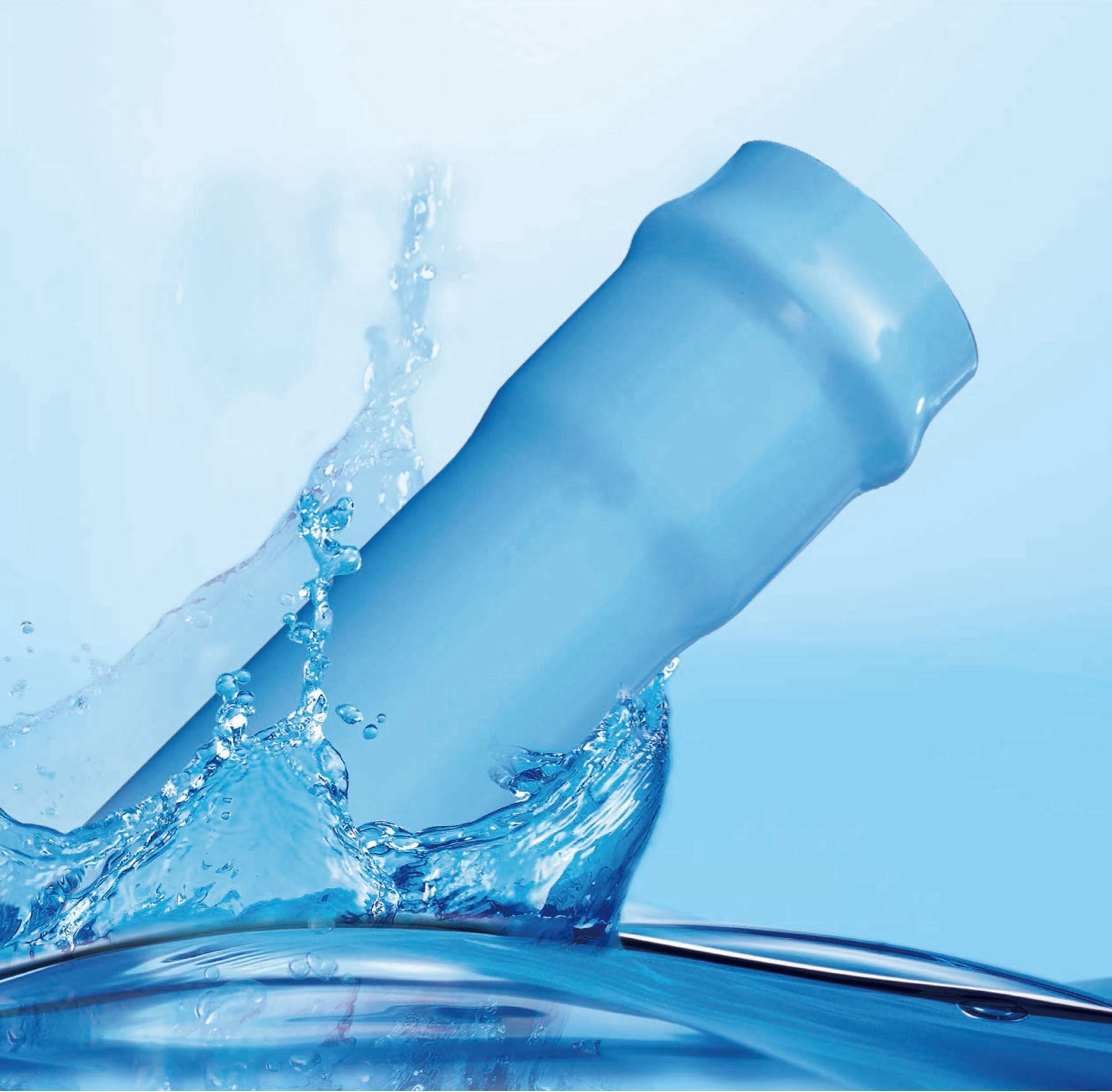
PVC-O
The Latest Evolution of PVC Pipes
PVC-O, known as Biaxially Oriented Polyvinyl Chloride, represents the most advanced form of PVC pipe. It is manufactured through a specialized orientation process that involves axial and radial stretching of extruded PVC-U pipes. This aligns the long-chain PVC molecules biaxially, resulting in pipes with superior strength, toughness, impact resistance, and fatigue resistance.
| Chinese Name | 双轴取向聚氯乙烯 |
| English Name | PVC-O |
| Production Process | Two-Step Method |
| Applications | Water Supply & Drainage Engineering |
| Original Developer | Uponor (UK) |
| Year of Introduction | 1970 |
Table of Contents
Product Overview
Development History
Production Principles
Production Technology
Processing Techniques
Key Considerations
Product Specifications & Performance
Pipe Wall Thickness
Strength & Toughness
Applications
Economic Benefits
Future Prospects
1. Product Overview
Orientation processing (or molecular alignment) significantly enhances the properties of many polymers. For instance, fibers, biaxially stretched films, and containers rely on orientation for superior performance. PVC-O pipes are manufactured by axially and radially stretching extruded PVC-U pipes, aligning the PVC molecular chains biaxially. This process improves mechanical properties while reducing material consumption, aligning with sustainable development goals.
Key Advantages:
35–40% thinner walls compared to PVC-U pipes.
Exceptional strength, impact resistance, and fatigue resistance.
Cost-effective and resource-efficient.
2. Development History
1970: Developed by Yorkshire Imperial Plastics (Uponor, UK).
1980s–1990s: Adopted by Vinidex (Australia), Uponor-ETI (USA), Polva (Netherlands), and Seperef (France).
Early Techniques: "Offline" two-step process (slow production, high costs).
Modern Advancements: "Inline" continuous production (improved efficiency, reduced costs).
Global Adoption: Widely used in the UK, France, Japan, Australia, and South Africa. Standards include ISO/DIS 16422-2006 and country-specific norms.
3. Production Principles
Molecular Orientation Mechanism
Temperature Range: Stretching occurs between the glass transition temperature (Tg) and melting temperature (Tm) to align molecular chains.
Biaxial Stretching: Enhances both axial (longitudinal) and radial (hoop) strength.
Critical Parameters:
Stretch Ratio: Higher ratios improve strength but risk material failure.
Stretch Rate: Faster rates minimize molecular relaxation for optimal alignment.
4. Production Technology
Key Processes
Offline Method: Post-extrusion heating and inflation (low efficiency, high costs).
Inline Method: Continuous stretching during extrusion (higher productivity, cost-effective).
Challenges:
Temperature uniformity during stretching.
Mechanical stability during radial expansion.
5. Product Specifications & Performance
Wall Thickness
PVC-O pipes are 35–40% thinner than PVC-U pipes (e.g., ISO 16422-2006 vs. GB/T 10002.1-2006 standards).
Strength & Toughness
Design Stress: Up to 28–32 MPa (vs. 20–25 MPa for PVC-U).
Impact Resistance: 10x higher than PVC-U.
Layered Structure: Prevents crack propagation, enhancing durability.
6. Applications
Water Supply: Replacing PVC-U in countries like the Netherlands and France.
Mining: Resists corrosive environments and mechanical stress.
Trenchless Installation: Cost-effective pipeline rehabilitation (e.g., Duraliner™ method).
Gas Networks: High strength-to-cost ratio in European countries.
7. Economic Benefits
Material Savings: 11.58% reduction in raw material use.
Cost Efficiency: 33–44% lower input per meter of pipe.
Market Price: 10–15% higher than PVC-U due to superior performance.
8. Future Prospects
Competitive Edge: PVC-O outperforms HDPE in blocking toxic substance permeation.
Sustainability: Coal-based PVC maintains cost advantages over oil-dependent polyolefins.
Innovation: Continuous advancements in orientation technology will expand applications in high-pressure and extreme environments.
Conclusion
PVC-O combines performance, cost efficiency, and sustainability, positioning it as the future leader in pipeline materials. Its biaxial orientation process exemplifies how technological innovation can enhance material properties while reducing resource consumption.
This translation maintains the original structure, technical accuracy, and key data points while adapting the content for clarity in English. Let me know if further refinements are needed!